


Disaster Recovery Services
Engineered Recovery that Restores Critical Services Quickly
Engineered properly, recovery means your critical services come back fast and predictably, so you can operate and change with confidence, knowing disruption is managed by design, not improvised in a crisis.
Downtime affects revenue, regulatory confidence, public trust and operational stability. The risk rarely sits in the headline system - it sits in undocumented dependencies, untested assumptions, misaligned RTO/RPO targets and security gaps exposed during crisis. Resilience fails under pressure when it has not been engineered, tested and governed in advance.
FourNet restores priority systems quickly, contains risk safely and brings performance back within agreed tolerances - with measured recovery times, controlled data exposure and full executive visibility. Recovery is engineered into your operating model, not improvised during crisis, integrating resilient infrastructure, active security operations and structured governance.














The Cost of Getting Recovery Wrong

How Recovery Is Engineered
FourNet begins with evidence. We baseline your availability, recovery posture, security controls and operational dependencies before recommending change.

What Changes When Recovery Is Engineered Properly
Recovery objectives are defined around operational consequence, tested through structured exercises and evidenced for audit and executive assurance.
-
Recovery windows aligned to business impact
Defined RTO & RPO targets -
Recovery validated through governed exercises
Structured resilience testing

Resilient Infrastructure as a Managed Control Layer
Recovery depends on stable, secure foundations. FourNet designs and operates integrated LAN, WAN and SD-WAN environments as a single managed service, aligned to cloud and hybrid operating models.
Segmentation, inherent security controls and policy-driven configuration reduce the likelihood and impact of failure. Where appropriate, services can be co-managed alongside internal teams, providing flexibility without sacrificing control.
Infrastructure is treated as a governed control layer – monitored, evolved and aligned to business risk appetite.


Service Delivery and Long-Term Optimisation
-

Essential
Operational reporting, incident governance and structured service reviews.
-

Assure
Enhanced oversight, trend analysis and proactive risk identification.
-

Optimise
Strategic improvement planning, resilience testing programmes and board-level insight.

AI Applied with Control and Governance
Artificial intelligence is used selectively to accelerate recovery diagnostics, identify anomaly patterns and improve forecasting of capacity or risk.
AI operates within defined governance controls, with human approval embedded in escalation and decision processes. It enhances speed and insight without removing accountability.
Evidence from Regulated and Public Environments
We deliver measurable improvements in resilience, availability and response performance without destabilising live services. Our approach combines secure infrastructure, integrated monitoring and governed operational control - ensuring changes are safe, visible and accountable at every stage, with full executive reporting throughout.

-
Reduced service disruption during incidents
Significant reductions in abandoned calls during periods of service instability, protecting access to critical services when demand is highest.
-
Improved availability through modernised infrastructure
Network modernisation and segmentation strengthen resilience, reducing single points of failure and improving overall service availability.
-
Faster escalation and resolution
Integrated monitoring and governance enable quicker identification, escalation and resolution of incidents, reducing operational impact and recovery time.
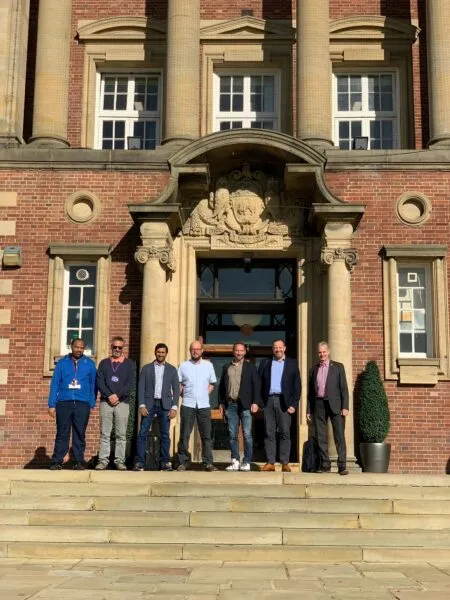
Leeds Beckett University - availability
No-single-point-of-failure design (Extreme Fabric) and zero downtime across a 19-year partnership.
Know Your Recovery Position Before You Need It
Our Approach
-
Discovery
Discuss your challenges and goals with us.
-
Analysis
Thorough examination of your current availability, recovery posture and dependencies.
-
Roadmap
A tested plan to restore critical services to measured RTO/RPO targets, without disrupting live operations.
Sector Experience
-

Regulated Enterprises
Respond to cyber incidents quickly and confidently while meeting regulatory obligations, minimising disruption and protecting customer trust.
Learn More -

Local Government
Citizen-facing services where downtime directly affects vulnerable residents and statutory obligations.
Learn More -

Healthcare and NHS
Clinical and patient services requiring availability, data protection and rapid escalation.
Learn More -

Emergency Services
High-availability communications and coordinated incident response environments.
Learn More
Partners
We're vendor-agnostic. We design around your environment and choose the right tools for the job - a Magic Quadrant leader, a challenger, or our own technology - integrating across network, endpoint, identity and SIEM without locking you into a single vendor stack. Our 24/7 UK SOC operates across the platforms you already trust.








FAQs
-
How is FourNet different from a traditional disaster recovery provider?
We integrate resilient infrastructure, security operations and ongoing governance into a single operating model. Recovery capability is embedded into day-to-day management, not documented and left untested.
-
How do you ensure recovery works in practice?
We conduct structured testing, scenario exercises and documented validation against defined RTO/RPO targets. Results are recorded and reported at executive level.
-
How is security integrated into recovery?
Security monitoring operates continuously. During incidents, alert investigation, containment and system restoration are coordinated through defined escalation processes.
-
Can this work alongside our internal IT team?
Yes. We support fully managed and co-managed models, depending on your operational structure and risk appetite.
-
How does this align to regulated environments?
Recovery governance, documentation and testing evidence are structured to support audit requirements and regulatory scrutiny.
-
What happens after go-live?
Through defined Service Delivery tiers and Customer Success engagement, we track value realisation, identify optimisation opportunities and evolve resilience posture over time.