

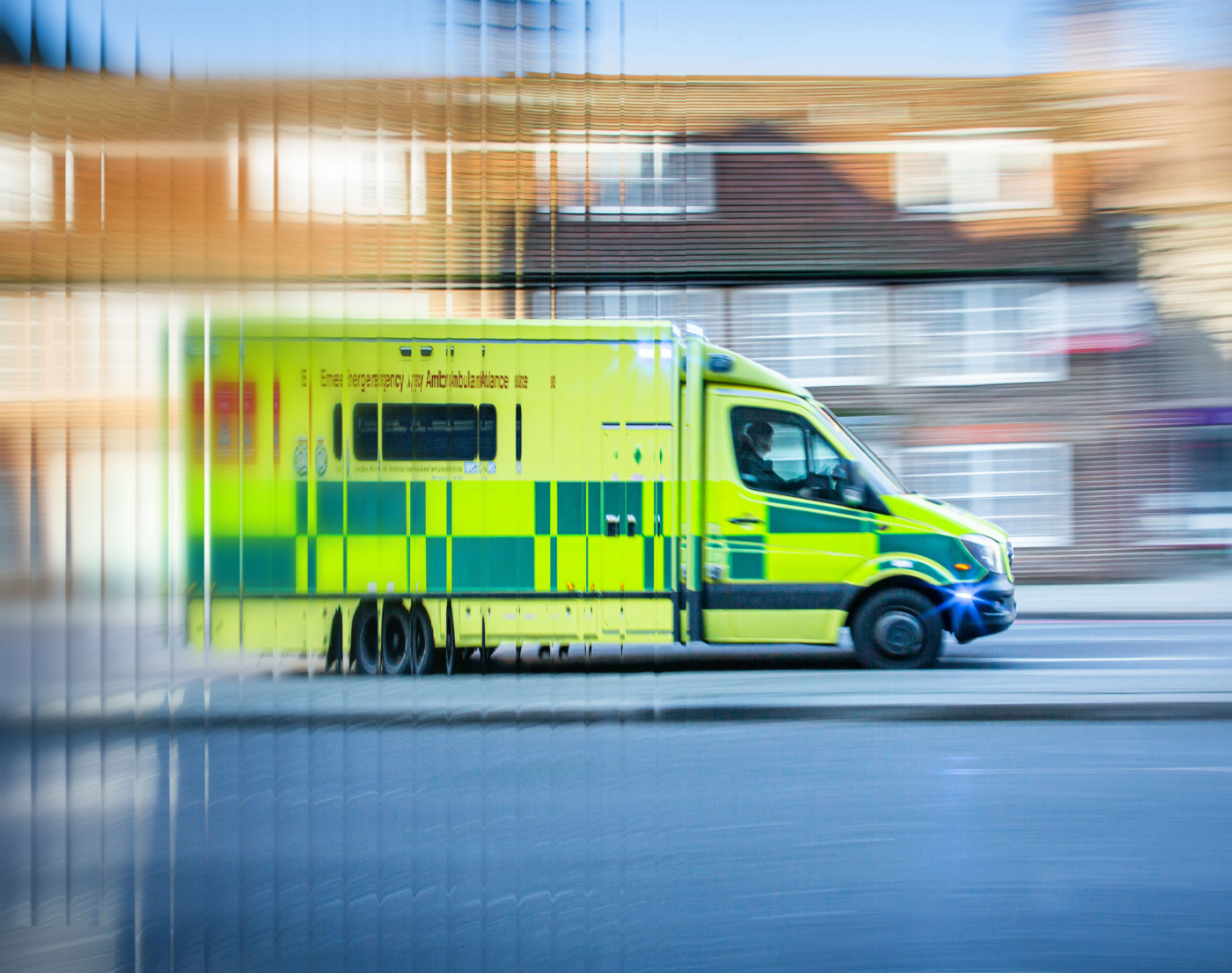
Ambulance
Building the next generation of 999 and 111 services
Modern, resilient, and measurably better for the people who run it, without putting a single emergency call at risk.
Ambulance control rooms are ready for more than they’re currently asked to deliver. We help trusts modernise 999 and 111 — strengthening resilience, easing the load on the workforce, and opening up AI-assisted ways of working — while core emergency call handling stays separated, protected and assured throughout. Improvement and availability, at the same time.





The ambulance leadership reality
-

Protect life-critical 999 handling
999 demand is unpredictable and clinically complex. Resilient infrastructure, intelligent triage support and workforce optimisation protect response times when it matters most.
-

Introduce innovation deliberately, not reactively
Digital and AI improvements are clinically governed, operationally tested and evidence-led - so they raise efficiency without ever compromising safety or compliance.
-

Sustain the workforce, not just the technology
Control room teams carry a cumulative load that current systems don’t measure. Seeing it, and acting on it early, is what keeps people well, keeps experience on the floor, and keeps the service resilient.
-

Hold steady under winter and major incidents
Seasonal surges and major incidents place extreme strain on contact and dispatch. Scalable technology, real-time visibility and secure systems keep the service stable under peak demand.
Outcomes That Matter to Ambulance Leaders
-
Assured access to 999 and 111
Maintain public confidence during surge, outages and major incidents, with core call handling protected through separation, resilient routing and tested failover – designed to perform when pressure hits.
-
Separation of life-critical and innovation layers
Introduce AI, automation and digital channels without increasing operational risk. Innovation stays governed, evidence-led and reversible – supporting clinical safety cases and audit requirements.
-
Safer, faster, more consistent triage
Reduce variation without adding handler burden. Guided workflows, knowledge and real-time support improve consistency, while structured QA and evidence trails strengthen governance.
-
Reduced emotional load and smarter workforce planning
Move from reactive staffing to proactive control. Forecasting, scheduling and real-time management reduce chaos in peaks – while automation removes avoidable admin and protects wellbeing.
-
Controlled transition from legacy estates
Stabilise CAD, telephony, recording and WFM while capability evolves. Coexistence architectures enable phased migration with model-office validation and rollback-ready cutovers.
-
Stronger security and audit confidence
Shorten the gap between emerging threats and effective mitigation through proactive monitoring, governed change and clear escalation – strengthening board-level assurance on availability and risk.
-
A workforce you can see, and protect
Measure the cumulative load your control room carries in real time – so you can act before it shows in the rota, protect your most exposed people, and release the capacity lost to avoidable absence.
-
Change that helps fund itself
Capacity and run-cost released by modernising – across workforce, network and platform – help fund the next wave of improvement. Reliable, secure foundations protect the value you release.
Assurance Before Innovation
We design environments where innovation sits alongside core emergency operations, never on top of them.
Emergency-grade contact, resilient connectivity, monitored routing and 24/7 cyber defence, combined with workflow redesign and workforce optimisation. Security and availability are treated as operational outcomes, not technical afterthoughts - cyber, network and contact under one accountable partner.
-
Assured emergency call delivery
Availability is the number one priority for every trust. We design for it: separated core call flows, resilient routing, monitored connectivity and backup infrastructure proven under incident conditions, not just in design documents.
-
Freedom from legacy constraints
Telephony is only part of what an EOC does, yet legacy limits can consume disproportionate time. We build platforms and architectures that flex as the trust changes – new channels, workflows, reporting and collaboration models – without a risky "big bang" replacement.
-
Strong security and operational oversight
No more constant firefighting. Our managed approach gives controlled change, clear ownership, proactive monitoring and rapid escalation – so availability stays protected.

Measure the load your control room carries
The Trauma Load Index turns the invisible psychological load of control room work into a real-time, measurable signal - so support reaches your people before crisis, not after. A FourNet capability, built support-first.
The Challenges Facing Ambulance Trusts
-
Sustained 999 and 111 Demand
Problem
Call volumes remain structurally high and operational complexity continues to grow.
Why it matters:
Handler overload increases risk, burnout and rework.
How FourNet helps:
We redesign journeys and workflows, apply intelligent routing and introduce workforce optimisation and analytics to remove avoidable effort while protecting Category 1 call handling. -
Protecting Assured Emergency Call Delivery
Problem
Digital transformation can introduce routing complexity and shared-network risk.
Why it matters:
999 operations cannot rely on “best effort” infrastructure.
How FourNet helps:
We design separated routing patterns, resilient connectivity and tested failover models so core emergency call handling remains predictable and protected under stress. -
Workforce Fatigue and Stability
Problem
High emotional load and turnover destabilise operations.
Why it matters:
Experience drains from the floor, affecting consistency and safety.
How FourNet helps:
Workforce management, workload balancing and guided workflows reduce pressure. Automation removes unnecessary admin, while humans remain in control of clinical decisions. The Trauma Load Index makes that load measurable, so support is targeted early. -
Responsible Automation and Clinical Governance
Problem
AI and automation introduce governance and audit risk if poorly controlled.
Why it matters:
Emergency services require defensible decision-making.
How FourNet helps:
We embed human-in-the-loop automation, clear rules of use, structured QA and evidence trails. AI supports handlers - it does not replace them. -
Winter Pressures and Major Incidents
Problem
Sudden demand spikes strain both systems and people.
Why it matters:
Operational instability damages confidence and morale.
How FourNet helps:
Resilient architecture, monitored failover patterns and scenario-based workforce planning. -
Legacy Estates and Coexistence
Problem
CAD, telephony, recording and WFM systems are deeply integrated and operationally sensitive.
Why it matters:
Forced migration introduces unnecessary risk.
How FourNet helps:
We design coexistence architectures over multiple years, validate in model office environments and implement controlled cutovers with rollback protection - ensuring stability throughout transition. When the time is right, we move trusts off legacy platforms such as Avaya on their own timeline – coexistence first, model-office validation, rollback-ready cutovers – never a forced migration.
Why ambulance trusts work with FourNet
Ambulance services need a partner who understands life-critical environments , not just contact centre technology.
-
Proven across UK ambulance services
We work with ambulance trusts in mission-critical 999 and 111 environments, where uptime, clarity and speed of response directly affect patient outcomes. In one trust, an operational review helped cut average speed of answer by around 20% and avoided significant recurring cost.
-
An emergency-grade platform
ANTENNA Storm is a cloud contact platform engineered for the availability emergency services demand, with an independent Red Phone for business continuity that can carry full call capacity if the primary platform ever goes down.
-
Workforce intelligence, not guesswork
The Trauma Load Index measures the cumulative load your people carry in real time, the evidence to protect wellbeing, reduce attrition and release capacity.
-
Deep experience with complex legacy estates
We modernise without disruption, integrating telephony, control room and back-office systems into a coherent, future-ready platform while operations stay stable throughout.
-
Always-on monitoring and escalation
Continuous 24/7 monitoring with defined escalation routes, run by UK-based teams, so issues are found and resolved fast.
-
Improvement that continues beyond go-live
Ongoing service management and optimisation: regular reviews, insight-led improvement, and capability that evolves with demand.
Consulting-led and assurance-first
We start with operating model, governance and resilience requirements, then design technology around them.
Our ACC operational review is a structured, vendor-neutral diagnostic delivered in five phases: discovery and data validation; demand, process and operational diagnostic; workforce and capacity modelling; a prioritised roadmap; and a quantified benefits framework. Consulting and solution functions stay separate, so recommendations follow the evidence, not a product.
-
Assurance by design: resilience built in from day one
Separation, resilience and governance are embedded early in the design, ensuring critical services remain stable, compliant and always available under pressure.
-
Coexistence over forced migration: modernise without disruption
New capabilities are introduced alongside existing systems, allowing services to evolve safely without the risk and disruption of large-scale, high-risk migrations.
-
Innovation with clinical and operational guardrails
AI, automation and digital channels are deployed in a controlled way, aligned to clinical safety, operational policy and real-world service demands.
-
Security and resilience as core outcomes, not bolt-ons
Cybersecurity, availability and incident readiness are treated as fundamental to service delivery, protecting patients, data and frontline operations at all times.
-
Ongoing optimisation, not one-off transformation
Continuous improvement is built into the service model, with performance, cost and experience regularly refined to deliver long-term value beyond initial deployment.
Modernise with confidence and protect every second
Our Approach
-
Discovery
Locate your service benchmark
-
Analysis
Review demand, workforce and response-performance evidence
-
Roadmap
Build an improvement roadmap for resilience, planning and staff support
"Nothing short of a miracle, 138 people feeling good about the difference they make to the service users." Project Lead, Government Agency



If you’re already a client, please call us at 0845 055 6366 or email hello@fournet.co.uk.
FAQs
-
How can we introduce AI safely into 999 environments?
AI must operate within defined clinical and operational guardrails. We implement human-in-the-loop automation, structured QA and audit trails so automation supports decision-making without replacing clinical judgement.
-
What do you mean by assured emergency call delivery?
Designing routing and connectivity so 999 calls are handled predictably under stress – including separated routing patterns, resilient connectivity and tested failover models.
-
Can we modernise without replacing our legacy telephony immediately?
Yes. We design phased coexistence models so legacy platforms continue operating safely while new capabilities are introduced incrementally.
-
How do you protect 999 during migration?
Through model office validation, controlled cutovers, rollback planning and clear clinical governance oversight during change.
-
How does cybersecurity fit into ambulance control rooms?
Security underpins availability. We integrate resilient network design with 24/7 monitoring and structured escalation to reduce operational risk and strengthen audit confidence.
-
How do you help reduce handler burnout?
Workforce optimisation, workload balancing, guided workflows and reduction of administrative effort through automation ease pressure while maintaining standards.
-
How do you prepare for winter and surge events?
We design resilient platforms and scenario-based workforce planning so scaling capacity does not compromise stability.
-
What makes FourNet different from other providers?
We are not platform resellers. We are a mission-critical delivery partner combining contact, secure networking and cybersecurity into a governed operating model specifically designed for regulated and blue-light environments.
-
How do you measure and protect control room wellbeing?
Through the Trauma Load Index – a real-time measure of the cumulative psychological load your people carry, built support-first and excluded by design from any performance process.
-
Can we move from our legacy platform without risk?
All change carries some element of risk but FourNet design coexistence first, validate in a model-office environment, and cut over with rollback ready – so you exit legacy platforms on your own timeline, never under pressure. An independent Red Phone protects continuity throughout.
-
How does this pay for itself?
Capacity and run-cost released by modernising – across workforce, network and platform – help fund the next wave of change, while secure, reliable foundations protect the value released.